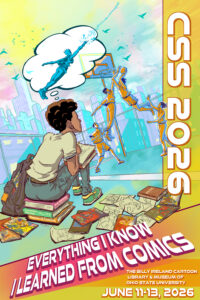
 In her talk at 2023’s Cartoon Crossroads Columbus festival, Susan Kirtley breaks comics studies pedagogy into three interrelated practices: teaching about comics, teaching with comics, and teaching through comics. In partnership with the Billy Ireland Cartoon Library and Museum, the 2026 Annual Conference of the Comics Studies Society will focus on pedagogical practices and related topics that broadly explore comics, teaching, and learning. In recent years educators have begun developing more robust comics pedagogies that expand beyond content–teaching about comics–or teaching complex ideas with comics, to consider what it means to engage with the forms and processes of comics and comics composition (teaching through comics). For instance, in interdisciplinary fields like Disability Studies, Indigenous Studies, and Latinx Studies (among others), comics are tied to transmission, preservation, and revival of central ideas and histories both in and beyond the classroom. From practitioners to scholars, researchers to students, archivists to editors, many in the field have made concerted efforts to consider how and why we engage with comics in the classroom. From special issues of journals focused on comics pedagogy to a growing number of books and collections, the scholarly interest in comics and classroom practices continues to grow.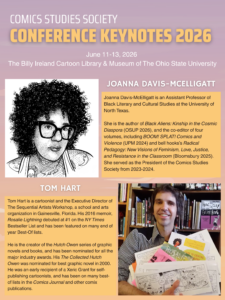
Since the turn of the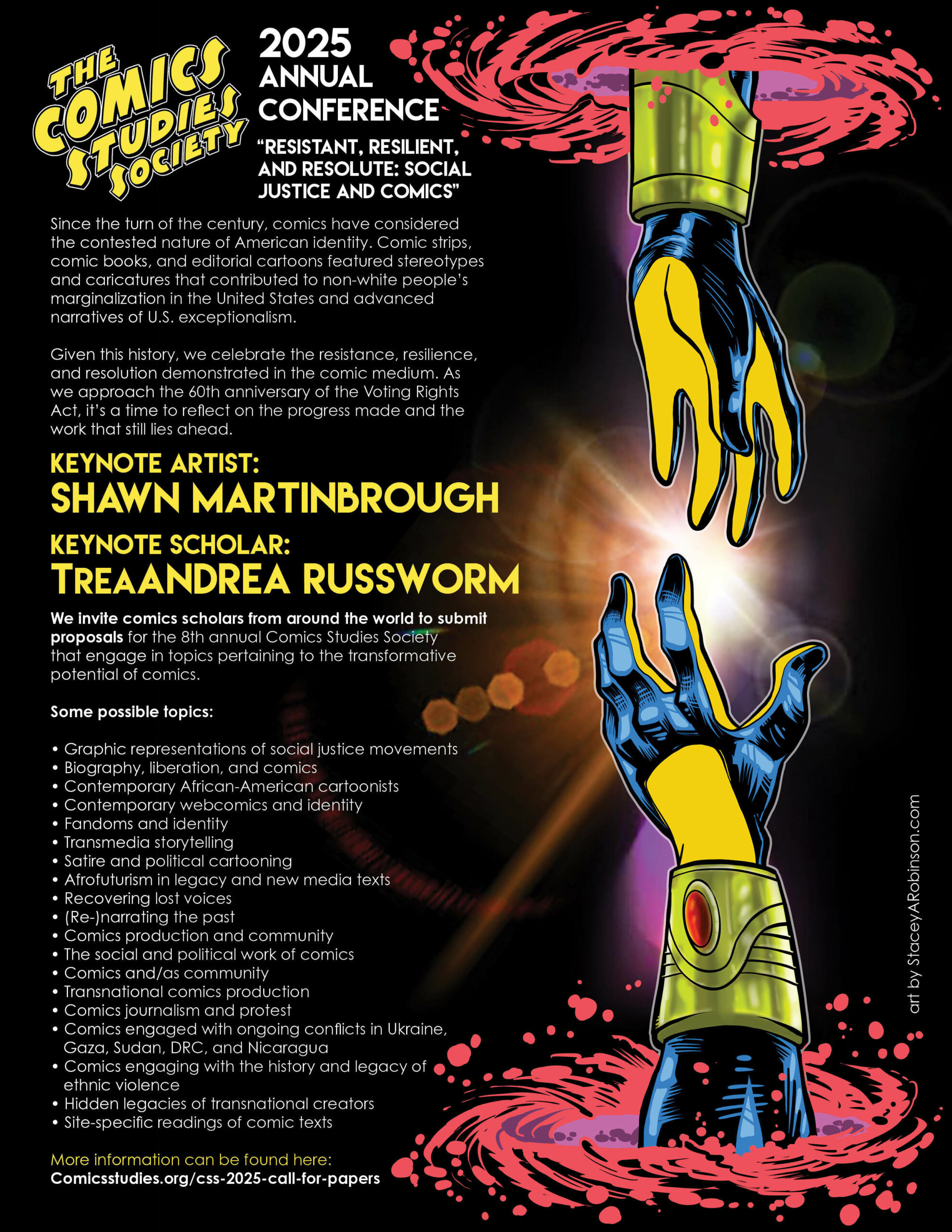 century, comics have considered the contested nature of American identity. Comic strips, comic books, and editorial cartoons featured stereotypes and caricatures that contributed to non-white people’s marginalization in the United States and advanced narratives of U.S. exceptionalism. The weight of this visual history often obscures the moments when artists, writers, and publishers fought against the regressive imaginary and offered something new. From the dynamic imagination of African American cartoonists such as Jay Jackson’s Bungleton Green in the 1940s to contemporary comic innovators such as C. Spike Trotman’s Iron Circus Comics, the urge to create diverse comics has a long legacy.
Given this history, we celebrate the resistance, resilience, and resolution demonstrated in the comic medium. As we approach the 60th anniversary of the Voting Rights Act, it’s a time to reflect on the progress made and the work that still lies ahead. We recognize that the revolution will be drawn and celebrate the artists, scholars, and communities that embrace the comic medium to do so. We celebrate an expanding literature in comic studies that highlights how those groups, often framed at the margin, have moved to the center of the cultural conversation. This is achieved not only through the celebration of characters that reflect them but also by seizing the imagined affordance of the comic form to elevate, transform, and inspire new conversation. Building on the dynamic comic scholarship that recognizes how readers leveraged the imagined affordance of the comic page to create new worlds and challenge old paradigms.
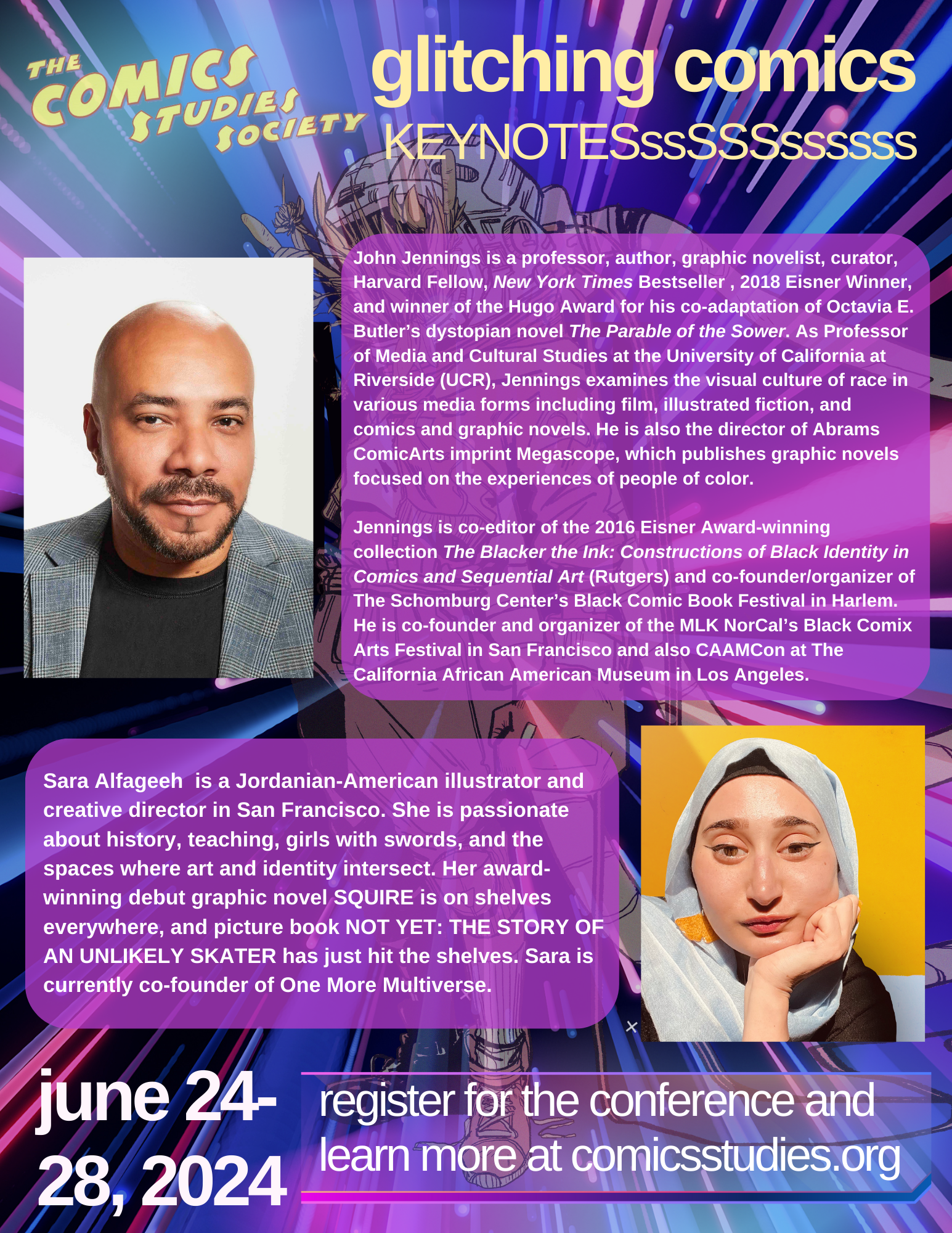
 In her 2020 publication Glitch Feminism: A Manifesto, Legacy Russell explores the notion of “glitch-as-error with its genesis in the realm of the machinic and the digital.” With this framing, she argues that glitches might “inform the way we see the AFK [Away-From-Keyboard or real] world, shaping how we might participate in it toward greater agency for and by ourselves” (8-9). With her sights set on social systems of gender, race, and sexuality in particular, Russell asks how embodied subjects who defy patriarchal white supremacist cisheterosexist norms are positioned or appear as glitches, as errors, in digital and AFK spaces. Rather than take for granted the normative understanding of glitch-as-error, Russell argues for a feminist praxis that reconceives glitches as a form of refusal and a means by which to challenge the status quo. Russell is particularly interested in how artists record, perform, and embrace the glitch to expose our flawed social systems, explore the in-between, and “imagine new possibilities of what the body can do, and how this can work against the normative” (14). To read Russell’s work online or to hear her talking about glitch feminism see here: https://www.legacyrussell.com/GLITCHFEMINISM
Building on Russell’s bold and necessary work, the CSS Conference Committee invites members to join us in glitching comics. What can errors in production processes of print comics reveal about systems of racialization? How might digital reading practices expose industry sexism or ableism? What do creators accomplish when they embrace glitchy aesthetics? How do comics or comics media that dwell in the in-between or sit with discomfort help us to refuse violent social norms? How do marginalized creators take advantage of systemic failures?
Like Russell, we recognize the feedback loop between digital and AFK spaces so we encourage participants to draw on print or digital comics, comics-related media, or texts that actively blur these distinctions. The Comics Studies Society invites proposals for 15-minute individual papers, pre-formed panels, media objects (such as critical making, comics, video, Twine, or performance), and pedagogy or other workshops that engage with how comics (across forms, genres, media, experiences, regions, and cultures) disrupt the status quo.
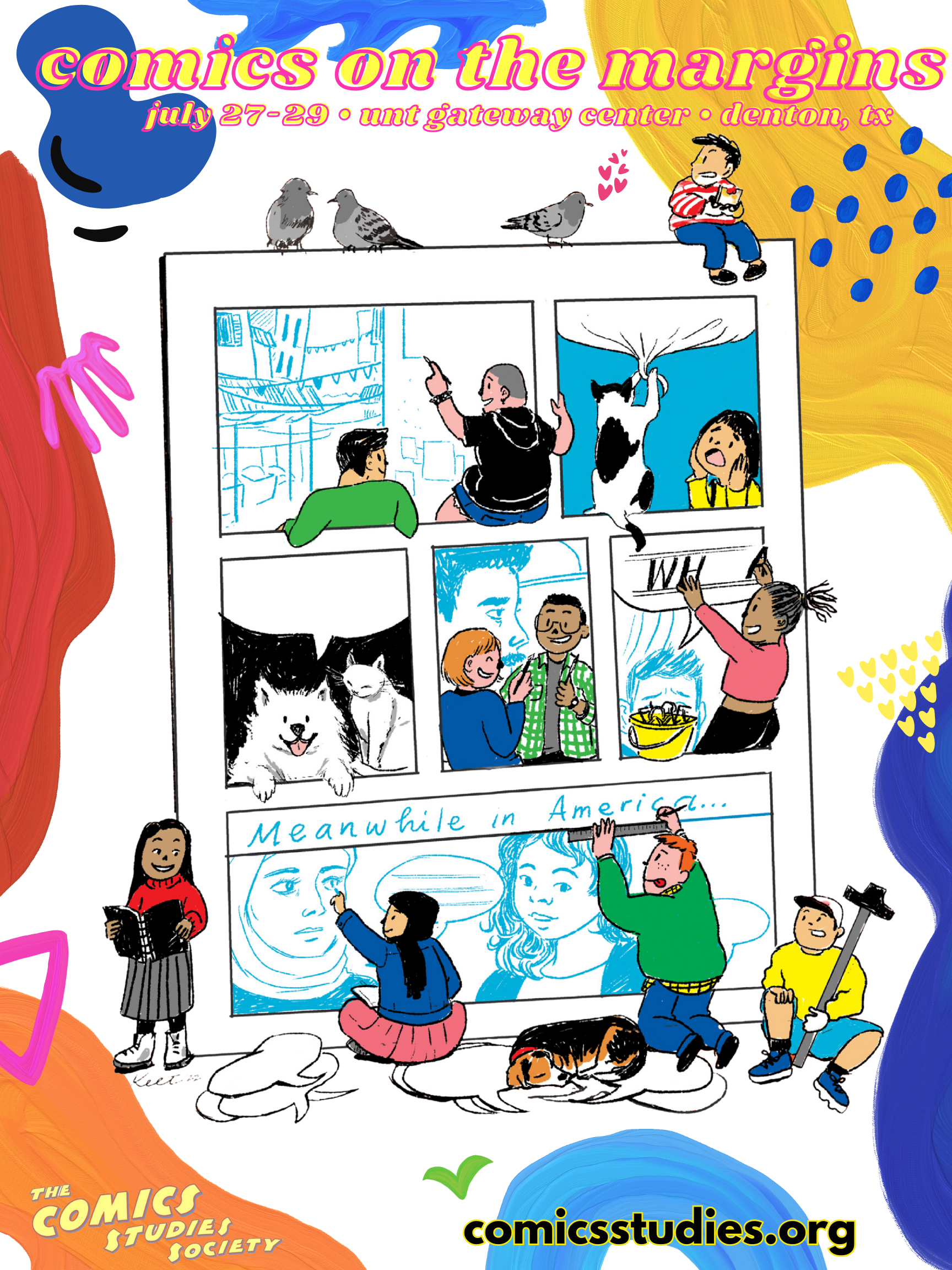
 Comics have long been associated with both literal and figurative margins—think underground comix artists who worked outside the mainstream or cartooning’s common categorization as an inherently disposable low art. The history of comics calls attention to marginalization as a formal structure, visual aesthetic, and sociopolitical position that shapes and reshapes culture, from racist and sexist caricatures that capture the anxiety of their moment to resistant narratives of marginalized BIPOC, queer, and disabled creators seizing their own graphic narratives. Comics likewise become legible and purposeful through the formal use of margins and gutters, sites that open up radical space for rebellious reading and meaning-making practices. At the same time, librarians and instructors at every educational level across the nation have had to contend with comic book bans that seek to marginalize certain cartoon narratives into nonexistence.
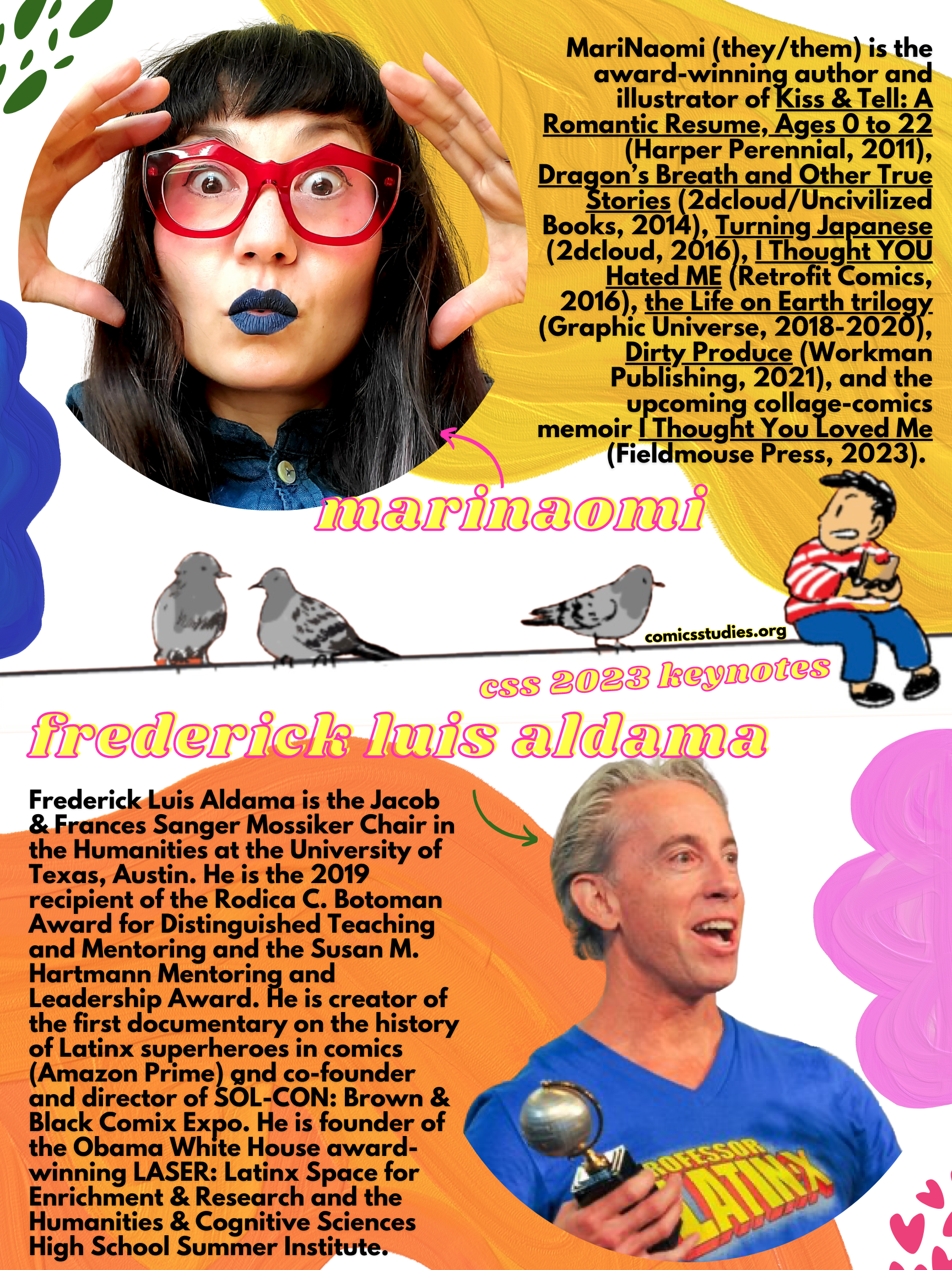
The 6th Annual Comics Studies Society Conference seeks to make space for comics on the margins, and encourages participants to consider the formal, aesthetic, political, and social ways of seeing and reading cartooning’s relation to the marginal spaces, concepts, and peoples. In direct response to the troubling legislation in Texas and elsewhere in the US, we hope to use this conference as a site of resistance to the politics of the state. To that end, we encourage roundtables, panels, workshops, and individual papers that work to better understand how comics creators and cartoons reshape, resist, and reclaim the margins. This year’s keynote presenters—Frederick Luis Aldama, Professor of English at the University of Texas at Austin, and MariNaomi, author of the forthcoming comic I Thought You Loved Me—reflect CSS’s ongoing commitment to supporting scholarship and cartooning by marginalized and underrepresented peoples.
Given the current post-Roe political climate, structured by anti-immigrant and antiblack violence and legislative attacks on LGBTQ+ identities, CSS recognizes Texas as a site of ongoing visible struggle against oppressive forces by marginalized scholars, teachers, librarians, and creators alike. In connection with the University of North Texas, a majority-minority Hispanic-serving research university serving 44,000 students in the Dallas-Fort Worth metroplex, the 6th Annual Comics Studies Society Conference Committee will highlight comics art, scholarship, and pedagogy that resist marginalization, and is committed to intentional engagement with and support of regional BIPOC artists and academics.
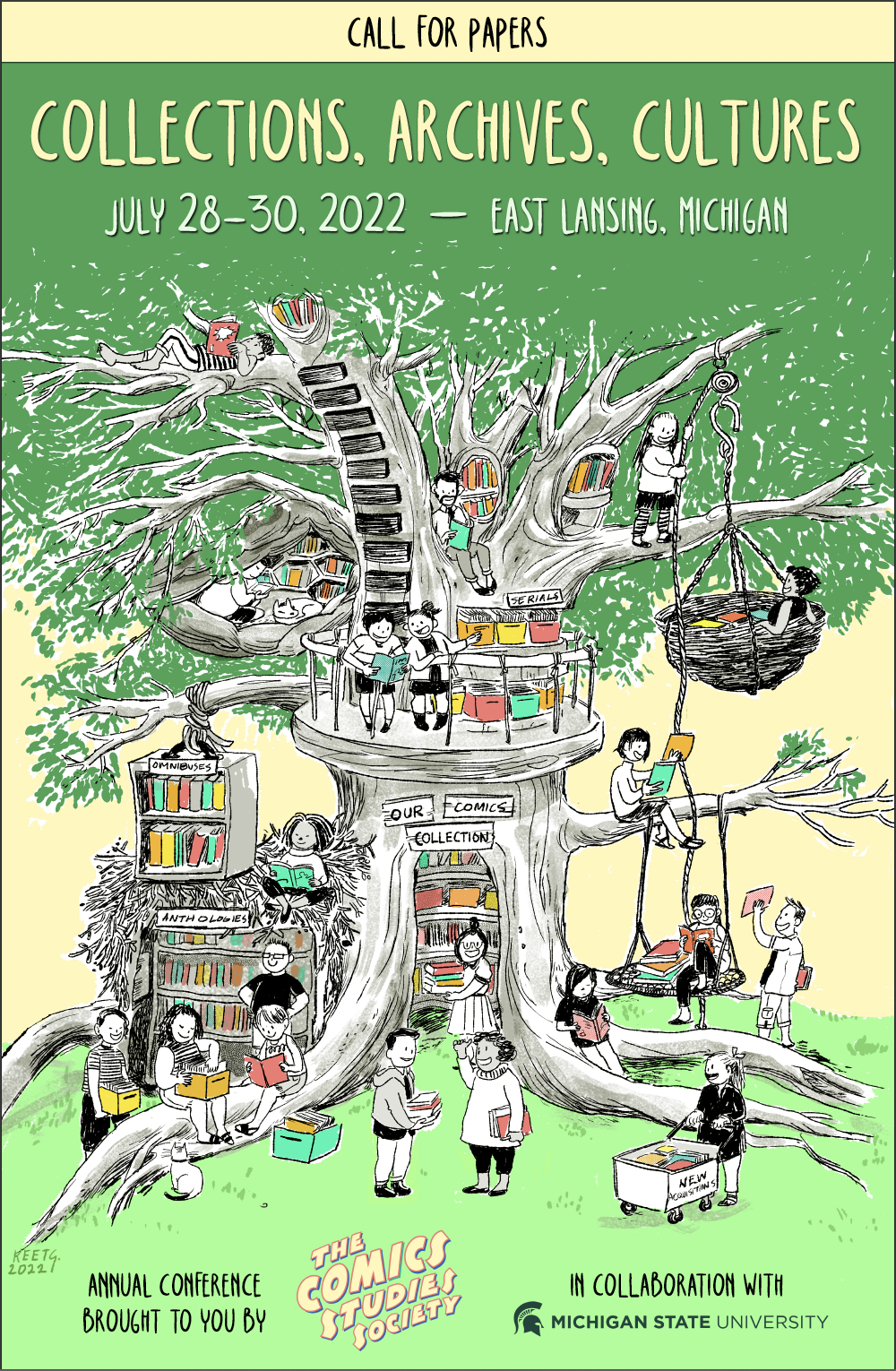
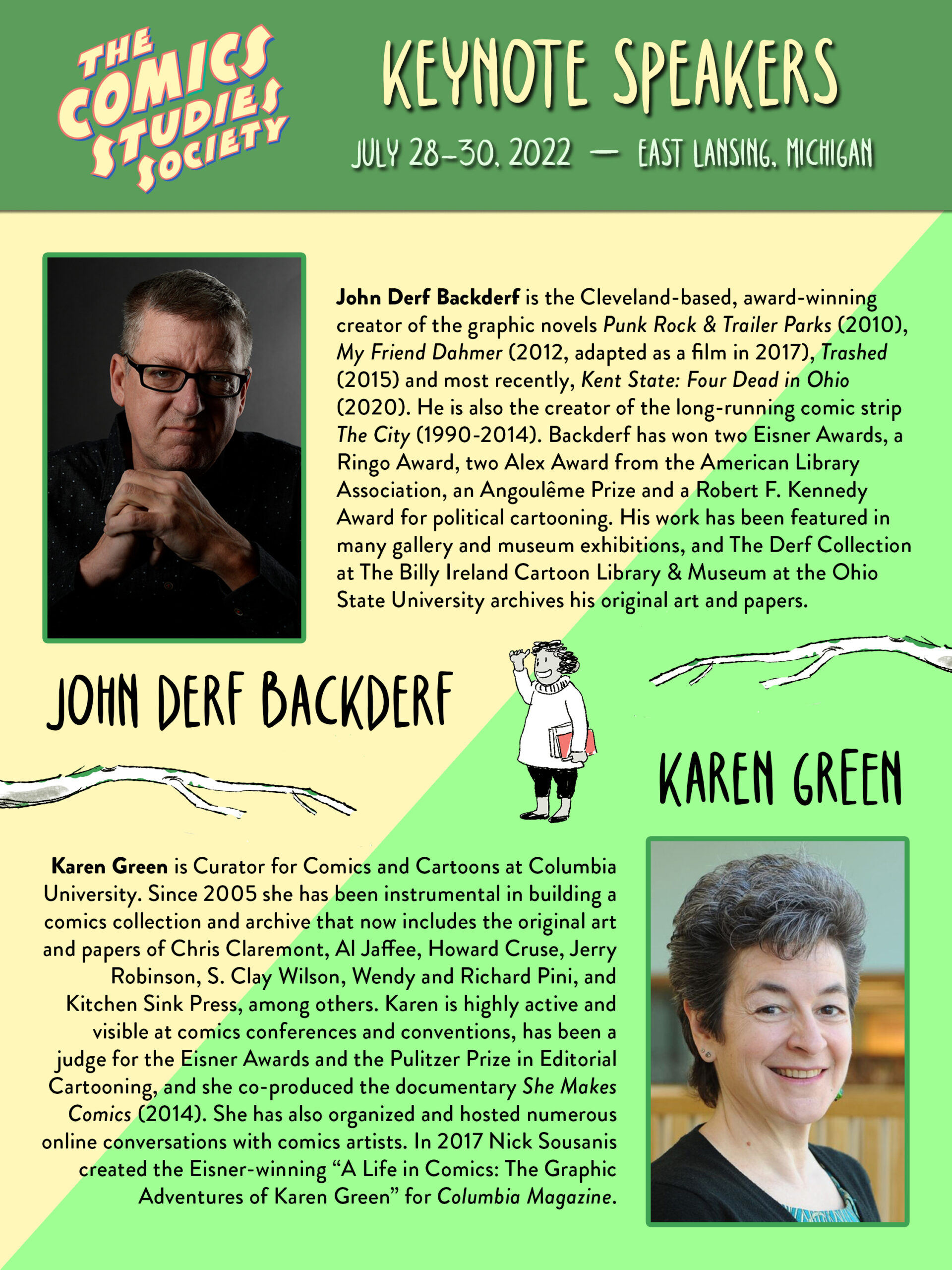
The fifth annual Comics Studies Society conference returns to an in-person format in 2022 at Michigan State University, home of the massive Murray and Hong Comic Art Collection. To mark this location and collaboration, we propose that the concepts of collections, archives, and their various cultures mark our gathering. What does it mean to form a collection, to curate a comics community, or inhabit collecting or archival cultures? What are the politics of collecting? What gets included, what gets discarded, and who gets to decide, and how? How do comics communities coalesce around collections, and how do they in turn create new ones that challenge those that have taken shape before them? We encourage our members to engage with these questions and concepts as they relate to their own innovative work in comics studies. We are particularly interested in proposals that address these questions of comics collections, archives, and cultures, and we especially welcome international approaches to this theme, though all submitted proposals will receive full consideration for inclusion in the conference program.
In recognition of some members’ preference for virtual participation in this year’s conference, we will accept proposals for virtual papers, panels, and roundtable discussions for a limited number of slots. Please also note that all presenters and attendees will be required to demonstrate proof of full vaccination (two shots and a booster) in order to participate in in-person events.
Suggested topics may include but are not limited to:
- Historical, sociological, cultural, and/or psychological approaches to comics collecting, community, formation/functioning/dissolution, and cultural shifts in these practices
- Discussions of alternative, oppositional, unofficial, or anti-archives and collecting practices, communities, and cultures
- Questions of race, ethnicity, gender, sexuality, and class in archival and collecting practices, communities, and cultures
- Critical considerations raised by the material culture of comics collecting and archiving: acquisition, preservation, storage, curation, restoration, grading, digitization, etc.
- Critical and historical examinations of the collected volume or series as archive
- Analysis of comics publishers or creators as de facto archivists/curators/collectors

Comics & Technology
The 3rd Annual Conference of the Comics Studies Society
August 5-8, 2020
Henderson State University, Arkansas
This 3rd annual conference seeks to bring together scholars, artists, and other members of the international Comics Studies community for critical conversations about the intersections between comics and technology across forms, genres, media, experiences, regions, and cultures. We are excited to be partnering with the Center for Comics Studies at Henderson State University.
Henderson State has been hosting Comics Studies courses for over two decades, features a minor in Comics Studies, and recently launched its Center for Comics Studies. It is also home to the Steven R. Bissette Collection. After successful conferences in Urbana-Champaign and Toronto, we are pleased to continue to diversify the geographical reach of our conference venues by convening in the southeastern United States.
Presentations may take the form of traditional 20-minute research papers or shorter contributions in roundtables organized around a specific theme.
Topics may include, but are not limited to:
- The technologies of comics publishing, translation, distribution, & consumption
- Representations of technology within comics, from rayguns to space stations and from photography to smart phones
- Science and technology, from atomic comics to mad scientists to climate change
- Cyborgs, digital culture, and posthumanism
- The histories of comics and technologies of creation and production, from print to digital
- Ethics, empathy and technology in comics journalism, documentary comics, graphic witness
- Technology, comics, & the intersections with gender, race, sexual identity, disability, & class
- Adaptive technologies and graphic accessibility
- Speculative technologies: Afrofuturisms, Indigenous futurisms, & comics in space
- Adaptation studies and comics between media technologies
- Technology as affordance and/or obstacle in comics discourse, public scholarship, & debate
- Graphic Medicine: Technology, science, and the medical humanities in comics
- The technologies of comics research, scholarly publishing, academia
- Pedagogical technologies, comics in the classroom, literacies
- Comics in the digital humanities
- Comics in science education
- The technologies of comics collecting, preservation, curating, display, & exhibition
- Comics as techne
Guidelines for Submission
We are accepting submissions for:
- Individual papers (20 min.)
- Panels of three papers
- Roundtables of short (5 min.) presentations by 4-5 presenters followed by discussion
- Virtual papers (20 mins.)*
A presenter’s name may appear twice in the program.
The Comics Studies Society is extending the deadline for its 3rd Annual Conference from January 15 to January 31, 2020. We will continue to accept proposals for papers, panels, and round tables through the end of the month and post acceptance notices by the end of February.
All proposals should be sent as Word files by email to: conference@comicssociety.org
The conference organizers will send out notifications of acceptance by the end of February. Please add our conference email to your trusted senders to ensure email delivery.
Conference presenters need to be current members of CSS at the time of registration.
Conference Co-Chairs: Matthew J. Smith (Radford U) & Randy Duncan (Henderson State U)
Comics/Politics
2nd Annual Conference of the Comics Studies Society
July 25-27, 2019
Ryerson University, Toronto
This 2nd annual conference seeks to bring together scholars, artists, and other members of the international Comics Studies community for critical conversations about the intersections between comics and politics across forms, genres, media, experiences, regions, and cultures. Presentations may take the form of traditional 20-minute research papers or shorter contributions in roundtables organized around a specific theme.
Topics may include, but are not limited to:
- The political histories of comics, canonization, censorship, awards
- The politics of comics historiography, periodization, surveying, mapping
- The politics of publishing, translation, distribution, consumption
- The politics of genre: traditions, rewrites, mash-ups
- The politics of the page: form and style
- The politics of creation and production
- Political comics, editorial cartoons, propaganda, educational & activist comics
- Comics journalism, documentary comics, graphic witness
- Comix, indies, mini comics, zines, countercultural, underground, taboo comics
- Critical race theory, ethnicity studies and comics
- Queer theory, sexuality studies, the body and comics
- Women’s comics, wimmen’s comix, gender studies and comics
- Indigenous comics and settler colonialism
- Migration, diaspora, conflict comics
- Ecopolitics, the Anthropocene, animals, non-humans, and comics
- Disability studies and comics studies
- The politics of the family, childhood, coming-of-age
- Politics of the future: fantasy, speculative, SF comics
- Politics of the past: nostalgia, retro, pastiche comics
- Intermedial politics, adaptations, remediations, hypermediations
- The politics of comics research, scholarly publishing, academia
- Pedagogical politics, comics in the classroom, literacies
- The politics of comics collecting, curating, display & exhibition
- Comics librarianship, acquisitions, cataloguing
Guidelines for Submission
We are accepting submissions for:
- Individual papers (20 min.)
- Panels of three papers
- Roundtables of short (5 min.) presentations by 4-5 presenters followed by discussion
A presenter’s name may appear twice in the program. The deadline for all submissions is January 15, 2019.
Go to the conference website to download submission templates in Word:
http://www.comicssociety.org/conference/
All proposals should be sent as Word files or PDFs by email to:
conference@comicssociety.org
The conference organizers will send out notifications of acceptance by February 15, 2019. Please add our conference email to your trusted senders to ensure email delivery.
Conference presenters need to be current members of CSS in 2019 at the time of registration.
The Comics Public Archive: CSS Conference Zine, Edition 2
Inaugurated at the 2018 CSS conference, all participants and attendees will be encouraged to take notes and/or document their conference experience in zine format (i.e. pencil, pen, crayons, markers, etc.). After the conference, participants can submit their zine (in PDF format) to conference organizers to be included in the official CSS 2019 zine to be made available on the CSS webpage. More details forthcoming.
Plenary Speakers
Jillian Tamaki is an illustrator and comics artist living in Toronto, Canada. A professional artist since 2003, she has worked for publications around the world and taught extensively in New York City at the undergraduate and graduate level. She is the co-creator, with her cousin Mariko Tamaki, of Skim and This One Summer, the latter of which won a Caldecott Honor and Printz Award in 2015. Her first picture book, They Say Blue, which explores our perception and experience of the natural world, was released in the Spring of 2018. www.jilliantamaki.com
Toronto’s Fiona Smyth is a feminist painter, illustrator, cartoonist, and educator. She collaborated with writer and sex educator Cory Silverberg on the Kickstarter funded picture book “What Makes A Baby” in 2012, re-released by Seven Stories Press in 2013. The second book in the series “Sex Is A Funny Word” was named a 2016 ALA Stonewall Book Award Honor book and won the 2016 Norma Fleck Award for Canadian Children’s Non-Fiction. A collection of her monthly comic CHEEZ from Exclaim Magazine was published by Pedlar Press in 2001 and her first graphic novel The Never Weres was published by Annick Press in 2011.
Fiona collaborated with writer Mariko Tamaki for her story in “Secret Loves of Geek Girls”, and cartoonist Ron Rege Jr. on Perish Plains Volume 4 for Perish Publishing. Her comics can also be found in Resist #1 and 2, edited by Francoise Mouly and Nadja Spiegelman, Mark Laliberte’s 4PANEL 2, and a thirty year collection of her comics titled Somnambulance published by Koyama Press in 2018.
Fiona was inducted into the Doug Wright Awards’ Giants Of The North Canadian Cartoonist Hall Of Fame alongside Alootook Ipellie in May 2019. She teaches illustration and cartooning at OCADU and the AGO. http://fiona-smyth.blogspot.com/
Moderator Qiana Whitted is Professor of English and African American Studies at University of South Carolina (USA). She is the author of EC Comics: Race, Shock, and Social Protest and editor of Inks: The Journal of the Comics Studies Society.
“Indigenous Comics Creators & Practitioners” | Plenary Speakers
Camille Callison is from the Tahltan Nation Tsesk iye (Crow) Clan located in northern British Columbia, Canada. She was the Indigenous Services Librarian/Liaison Librarian at the University of Manitoba for almost seven years, where she is now the Learning & Organizational Development Librarian. Camille was the founding librarian of the first Indigenous graphic novel collection in an academic institution, Mazinbiige Indigenous Graphic Novel Collection, located in Elizabeth Dafoe Library at the University of Manitoba. Together with Dr. Niigaanwewidam Sinclair, they collaborated to found this innovative collection and were fortunate that Jay Odjick, a Kitigan Zibi Anishinabeg writer, artist and television producer graciously agreed to let them use ‘Kagagi’ to represent this landmark collection. Camille is the past Vice-Chair, Indigenous Representative, Canadian Federation of Library Associations (CFLA-FCAB) & Past Chair, Indigenous Matters Committee (IMC-CQA). She is a member of the International Federation of Library Associations and Institutions (IFLA) Indigenous Matters Section Standing Committee and the Canadian Commission for UNESCO Memory of the World Committee and Sector Commission on Culture, Communications & Information. She has a forthcoming chapter, “Making Use of the White Space: The Mazinbiige Indigenous Graphic Novel Collection at the University of Manitoba” in Comics and Critical Librarianship: Reframing the Narrative in Academic Libraries (eds. Olivia Piepmeier and Stephanie Grimm). For more: https://libguides.lib.umanitoba.ca/mazinbiige
Cole Pauls is a Tahltan comic artist, illustrator and printmaker hailing from Haines Junction (Yukon Territory) with a BFA in Illustration from Emily Carr University. Residing in Vancouver, Pauls focuses on his two comics series, the first being Pizza Punks (https://pizzapunkscomix.tumblr.com/),a self contained comic strip about punks eating pizza, the other being Dakwäkãda Warriors. In 2017, Pauls won Broken Pencil Magazine’s Best Comic and Best Zine of the Year Award for Dakwäkãda Warriors II. Follow Cole Pauls here: https://www.instagram.com/tundrawizard/
The Dakwäkãda Warriors zines are forthcoming as a collected volume with Conundrum Press in Fall 2019: https://www.conundrumpress.com/forthcoming/dakwakada-warriors/
Watch a CBC video about Cole’s Indigenous futurist and punk comics: https://www.cbc.ca/arts/exhibitionists/cole-pauls-s-comics-preserve-first-nations-language-and-also-celebrate-punks-eating-pizza-1.5092379
Tara Audibert is a Wolastoqey artist and the owner of Moxy Fox Studio, an independent animation, comics and illustration studio located in New Brunswick, Canada. Tara produced her 1st animated film, “The importance of Dreaming” (2017), appearing in film festivals worldwide, winning several awards including the UNICEF Best Children’s Film Award at the Indianer Inuit Film Festival in Germany. She is a founder of the Ni’gweg Collective, an Aboriginal owned and female led group, they recently launched the Storytelling Game App- “Nitap: Legends of the First Nations”. Tara has spent over 15 years illustrating comics based on Aboriginal Issues & Residential Schools (Lost Innocence) which has been added to the Archives of Canada, and over 20 years working in TV animation on shows like Teletoon’s Olliver’s Adventures, Delilah & Julius, WB Johnny Test & Zoom TV. Tara also co-hosts a weekly comedy motivational podcast called “No Such Thing as Grown Ups”. For more: www.MoxyFox.ca
Moderator Amy Desjarlais is an Ojibway/Bodwewotomi Anishinaabekwe n’daaw (Ojibway/Potowottomi of the Anishinaabe Nation) knowledge keeper, researcher, teacher, community organizer, multidisciplinary artist, hand drummer and singer. She currently works at Ryerson University as the FNTI Coordinator of the Bachelor of Social Work program, offered in partnership with First Nations Technical Institute, and she works with York University as knowledge keeper. For more information about Amy, see her blog: https://earthtalker.wordpress.com/about/about-amy/

